
In the heavy-duty repair business, a bevel gear that is “almost perfect” is actually a disaster waiting to happen. For a workshop owner, the most dangerous thing in your shop isn’t a heavy engine or a sharp tool; it is a tiny measurement error. We are talking about 0.05mm. That is less than the thickness of a single human hair.
If the backlash in your bevel gear set is off by that tiny amount, you aren’t just looking at a noisy axle. You are looking at a “silent profit killer.” In a world where labor costs are rising and customers are more demanding than ever, one single comeback can wipe out your entire week’s profit.
At CK Gears, we have seen it happen hundreds of times. A shop tries to save $50 by buying a cheaper, lower-quality gear set. Six months later, the truck is back on the hook, the customer is screaming, and the shop owner is losing money. Today, we’re going to do the math and show you why precision matters more than price.
1.What Exactly is Backlash? (And Why 0.05mm Matters)
Backlash is the small gap between the teeth of your gears. You need this gap to allow for lubrication and the thermal expansion of the metal as it gets hot during a long haul.
Too Much Backlash: The teeth “slap” together. This causes a loud “clunking” noise and leads to chipped teeth under heavy torque.
Too Little Backlash: The gears rub too tightly. This creates massive heat, breaks down the oil, and eventually welds the gears together.
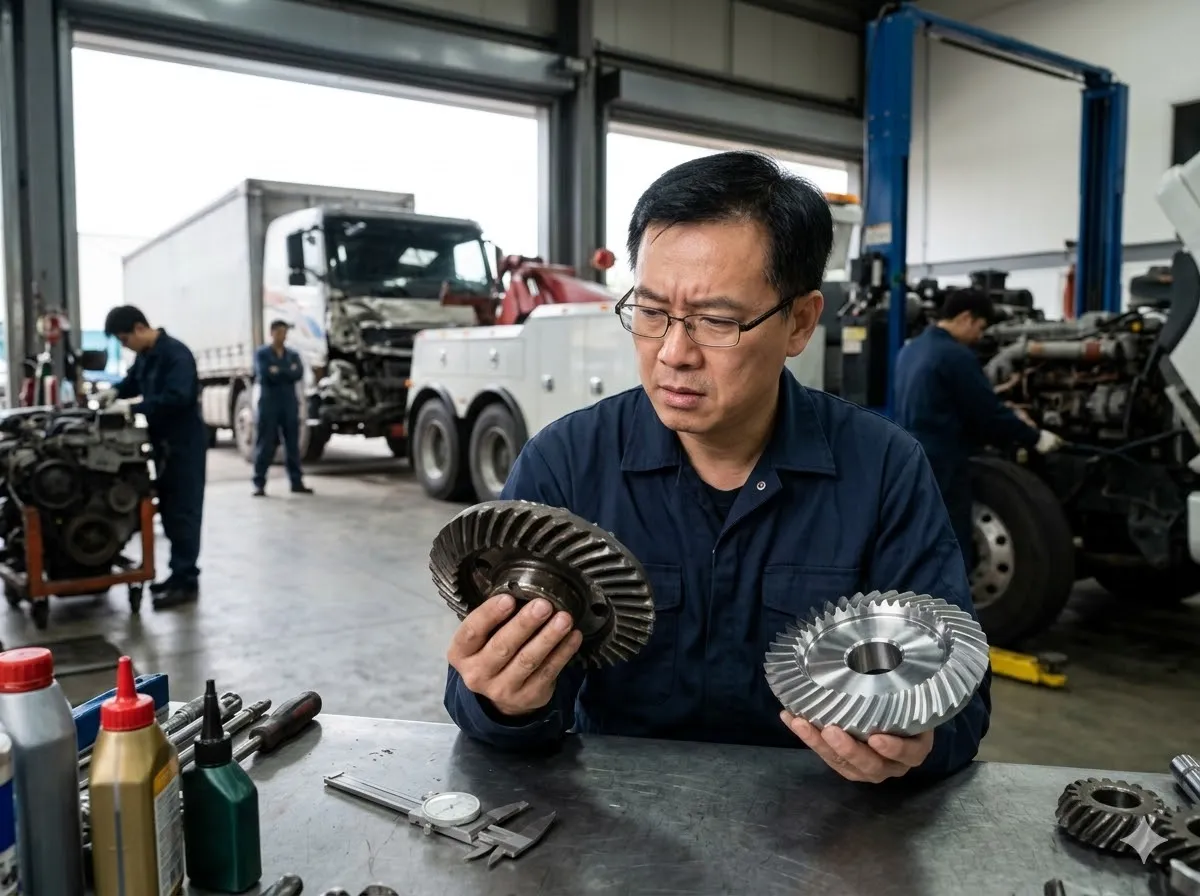
When a bevel gear is manufactured using old-fashioned milling instead of high-precision grinding, the tooth surface is uneven. Even if the installer is an expert, they cannot fix a gear that was cut poorly at the factory. If that tooth profile varies by just 0.05mm, the load will not be spread evenly. One part of the tooth takes all the pressure, and that is where the failure starts.
2.The Real Cost of a “Cheap” Gear (A Business Breakdown)
Let’s look at the actual numbers. Many buyers focus on the “Invoice Price.” But as a business owner, you need to focus on the “Installed Cost.”
Imagine you install a low-quality bevel gear to save a little money. Six months later, it fails. Here is what that “cheap” gear actually costs you:
The “Comeback” Math:
Towing Fees: Most heavy-duty trucks won’t move when a differential fails. You might have to cover a $500 towing bill just to get the truck back to your bay.
Lost Labor Hours: Your best mechanic has to spend 8 to 10 hours tearing down the axle, cleaning out metal shavings, and re-installing a new set. At a shop rate of $120/hour, that is $1,200 in lost time.
The “Warranty” Trap: Even if your supplier gives you a free replacement part, they won’t pay for your labor or the oil. You are doing the work for free the second time.
The Ghost Cost (Reputation): This is the biggest killer. That customer will tell their friends that your shop uses “bad parts.” They might leave a 1-star review on Google. You lose future business that you can’t even see.
When you add it up, saving $50 on a bevel gear can easily cost you $2,000 or more in real losses.
3. Why Grinding is the Only Solution for Modern Fleets
In the old days, engines were loud, and gear noise didn’t matter as much. But today’s trucks—especially those from Volvo, Scania, and the new EV models—are designed for high efficiency and quiet operation.
If you use a bevel gear that was only “milled” (cut with a blade), the surface has tiny ridges. These ridges create friction, heat, and that dreaded high-pitched “whine.”
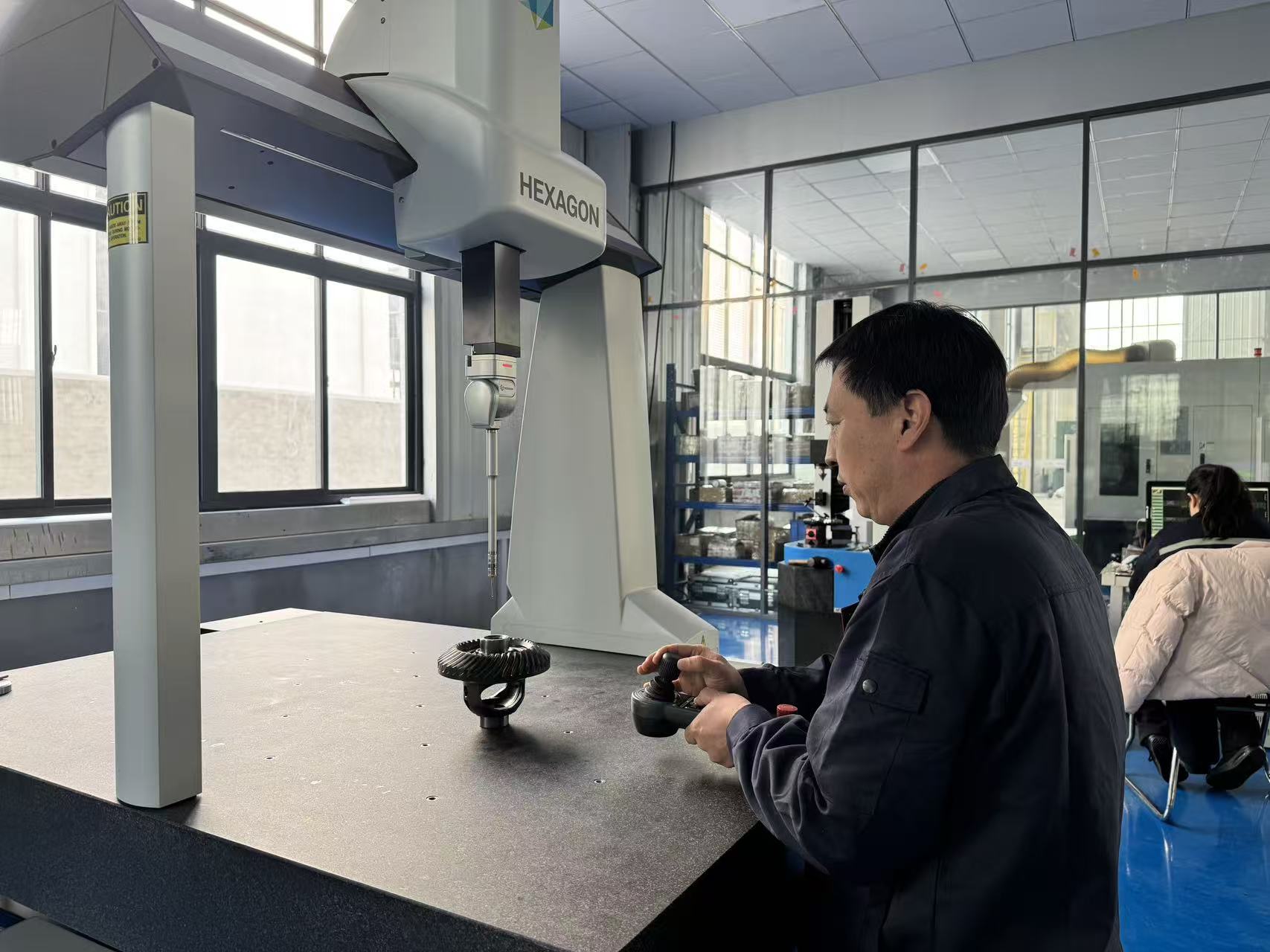
At our factory, we use Precision Grinding systems from Gleason and Klingelnberg. This process polishes the tooth surface to a mirror-like finish. We keep our tolerances within microns, not millimeters. When the surface is that smooth, the oil stays on the metal, the heat stays low, and the backlash remains stable for years, not months.
4. How to Spot a “Profit Killer” Before You Install It
You don’t need a lab to spot a bad supplier. As a professional, you can look for these three signs when your bevel gear arrives:
Check the Surface Finish: If you can see “lines” or “ridges” on the tooth with your naked eye, it was milled, not ground. This gear will be noisy.
Look for the Lead-Out Data: Does the part come with a testing report? A real factory like CK Gears tracks every unit. If there is no data, there is no quality control.
Test the “Pattern”: When you run a contact pattern test, is the “paint” centered perfectly? If the pattern is at the very edge (the toe or the heel), the gear geometry is wrong. No amount of shimming will fix a bad gear.
5. CK Gears: Your Partner in Protecting Margins
At the end of the day, your workshop’s success depends on “Right the First Time.” Every time a truck leaves your shop and stays on the road for 500,000 kilometers, your reputation grows.
We don’t just sell a bevel gear; we sell a “Zero-Comeback” guarantee. Because we own our Mold Center and our own heat-treatment facility, we control every single 0.01mm of the process. We use 20CrMnTiH alloy steel because it is the only material tough enough to handle the torque of modern logistics.
By switching to our precision-ground solutions, you are choosing to:
Eliminate Noise Complaints: Our gears run silent, even under heavy loads.
Reduce Warranty Claims: Our parts outlast the competition, keeping your mechanics focused on new paying jobs, not old rework.
Boost Your Brand: You become the shop known for “The Best Drivetrain Work in Town.”
Stop Paying for “Almost Perfect”
In a competitive market, you cannot afford to pay for mistakes. A 0.05mm error in your bevel gear is a leak in your bank account. It’s time to stop gambling with cheap parts and start investing in precision that pays for itself.
At CK Gears, we are ready to be your technical back-office. We provide the high-standard, factory-direct components that the global automotive aftermarket demands. Let’s work together to make sure that the only thing “silent” in your workshop is your gears—not your profit.