When sourcing a high-quality Bevel Gear, the biggest risk to your business is the “middleman” trap. In the global auto parts market, thousands of companies claim to be manufacturers. They have professional websites, beautiful catalogs, and low prices. But when you look closer, many are just trading companies sitting in a small office, miles away from a real machine.
For a B2B buyer, working with a middleman instead of a direct factory is dangerous. You pay more because of hidden markups, you have zero control over the production quality, and you face longer delays because the person you are talking to doesn’t actually own the machines.
At CK Gears, we believe in transparency. We want our partners to know exactly where their parts come from. To help you protect your supply chain, we have put together this guide. Here are the 7 red flags that indicate your Bevel Gear supplier might not be a real factory.
1.The “Everything for Everyone” Catalog
A real factory is specialized. Making a high-performance Bevel Gear requires millions of dollars in specific machinery, like Gleason or Klingelnberg cutters.
If your supplier’s catalog includes tires, brake pads, oil filters, and gears, they are almost certainly a trading company. A true manufacturer focuses on one thing: mastering the art of gear production. At our facility, every square inch is dedicated to drivetrain components. We don’t get distracted by other parts because we are busy perfecting the gear sets our customers depend on.
2. No Live Factory Videos or “Walk-Throughs”
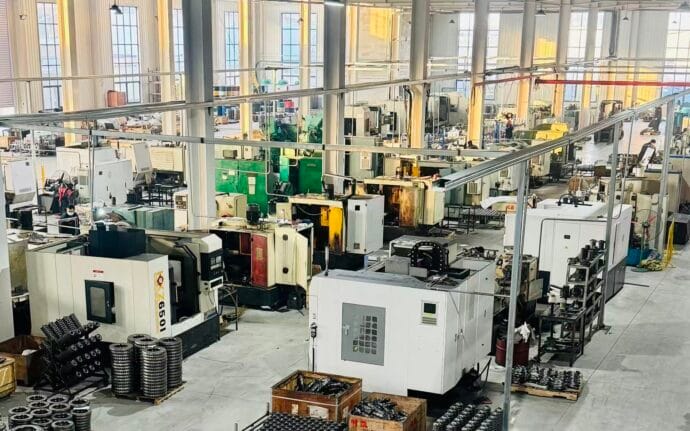
In today’s world, a few “stock photos” of a factory floor aren’t enough. Many middlemen buy or steal photos from real factories to put on their websites.
The Test: Ask for a live video call or a raw, unedited video of the production line. A real Bevel Gear manufacturer will be proud to show you their heat treatment area, their grinding machines, and their testing labs in real-time. If they make excuses about “safety rules” or “privacy” every time you ask for a video, it is a major red flag.

3. The “Outsourced” Mold Center
When you need a custom ratio or a part for a rare truck model, the mold is the most important step. A real factory will have an in-house Mold Center.
If you ask about custom development and the supplier says, “We need to check with our partner factory for the mold cost,” they are a middleman. Owning the mold shop allows a factory to control the speed and the precision of the project. If they outsource the mold, they are just a messenger. At CK Gears, our mold center is inside our building, which is why we can develop custom parts weeks faster than the competition.
4. Lack of Raw Material Stock
Go into any real gear factory, and the first thing you will see is stacks of raw steel. For a premium Bevel Gear, we use specialized high-alloy steel like 20CrMnTiH.
Because we produce in large volumes, we keep a massive inventory of this steel on-site. Middlemen don’t keep inventory. They wait for your order, then they go find a factory that has the material. If your supplier cannot show you their raw material warehouse, they aren’t the ones doing the heavy lifting.
5. Sales Talk vs. Technical Expertise
When you have a technical question about “tooth contact patterns” or “backlash adjustment,” who answers the phone?
In a trading company, you talk to a salesperson who reads from a script. If the question is too hard, they have to “email the tech team” (who actually works at the factory they buy from). When you talk to a real Bevel Gear manufacturer, you are talking to engineers. We can explain the science behind our deep carburizing process because we are the ones standing next to the furnace.
6. The Missing Testing Lab
Quality control is where middlemen fail the most. To ensure a Bevel Gear is silent and durable, you need expensive testing equipment like a CMM (Coordinate Measuring Machine) and a noise testing booth.
Middlemen rarely invest in these machines because they are too expensive for a small office. They rely on the factory’s word that the parts are “good.” But who is checking the factory? When you buy direct, the factory’s own QC team is responsible for your order. We provide CMM reports and lead-out data because we own the equipment that generates it.
7. Unstable Lead Times and “Ghosting”
Have you ever had a supplier tell you a part would take 30 days, but it ended up taking 60?
This happens because the middleman is at the mercy of the factory’s schedule. If a bigger client comes along, the middleman’s small order gets pushed to the back of the line. They can’t do anything about it because they don’t control the production schedule. A direct factory gives you a date and sticks to it. We manage our own production lines, so when we give you a deadline for your Bevel Gear order, we keep it.
Why Buying Direct Changes Everything
The “middleman markup” isn’t just about money; it’s about the risk to your reputation. If you sell a noisy or weak Bevel Gear to your customer, they won’t blame the middleman—they will blame you.
When you partner with a direct manufacturer like CK Gears, you cut the noise. You get:
Lower Costs: No middleman commissions.
Faster Development: Direct access to our in-house mold center.
Better Quality: Total control from raw steel to the final CMM report.
True Support: Engineers who actually know how gears work.
We invite all our B2B partners to “see the steel.” Whether through a live video tour or a visit to our facility, we want to show you why we are the trusted source for European and Japanese truck gear solutions worldwide.
Stop guessing and start sourcing with confidence.
Let’s Connect Personally
Would you like to see our production line in action? We can hop on a quick video call right now to show you our Gleason machines or our testing lab. Seeing is believing, and we have nothing to hide.
Would you like me to send you our latest factory tour video or a technical overview of our custom mold capabilities?