
In the world of heavy-duty logistics, a Differential Assembly is more than just a metal box full of oil and gears; it is the heartbeat of the truck’s axle. For a procurement manager or a parts distributor, the “unit price” on a quote is often a distraction. The real cost that matters is the cost of failure. When a truck is sidelined on the highway because of a seized gear or a leaking seal, the losses in time, reputation, and repair labor far outweigh any initial savings.
At CK Gears, we understand that our B2B partners aren’t just looking for parts—they are looking for peace of mind. They want to know that when they install a unit into a Volvo, Scania, or Isuzu truck, it will run silently and reliably for years. To provide that certainty, every Differential Assembly we build must pass through a rigorous five-stage quality gate.
Here is a look at the “Science of Certainty” we apply to every unit before it is crated for shipment.
1. CMM Inspection: The “Digital Twin” Verification
Precision is not something you can see with the naked eye. In the manufacturing of a Differential Assembly, the difference between a gear that lasts ten years and one that fails in ten months is measured in microns.
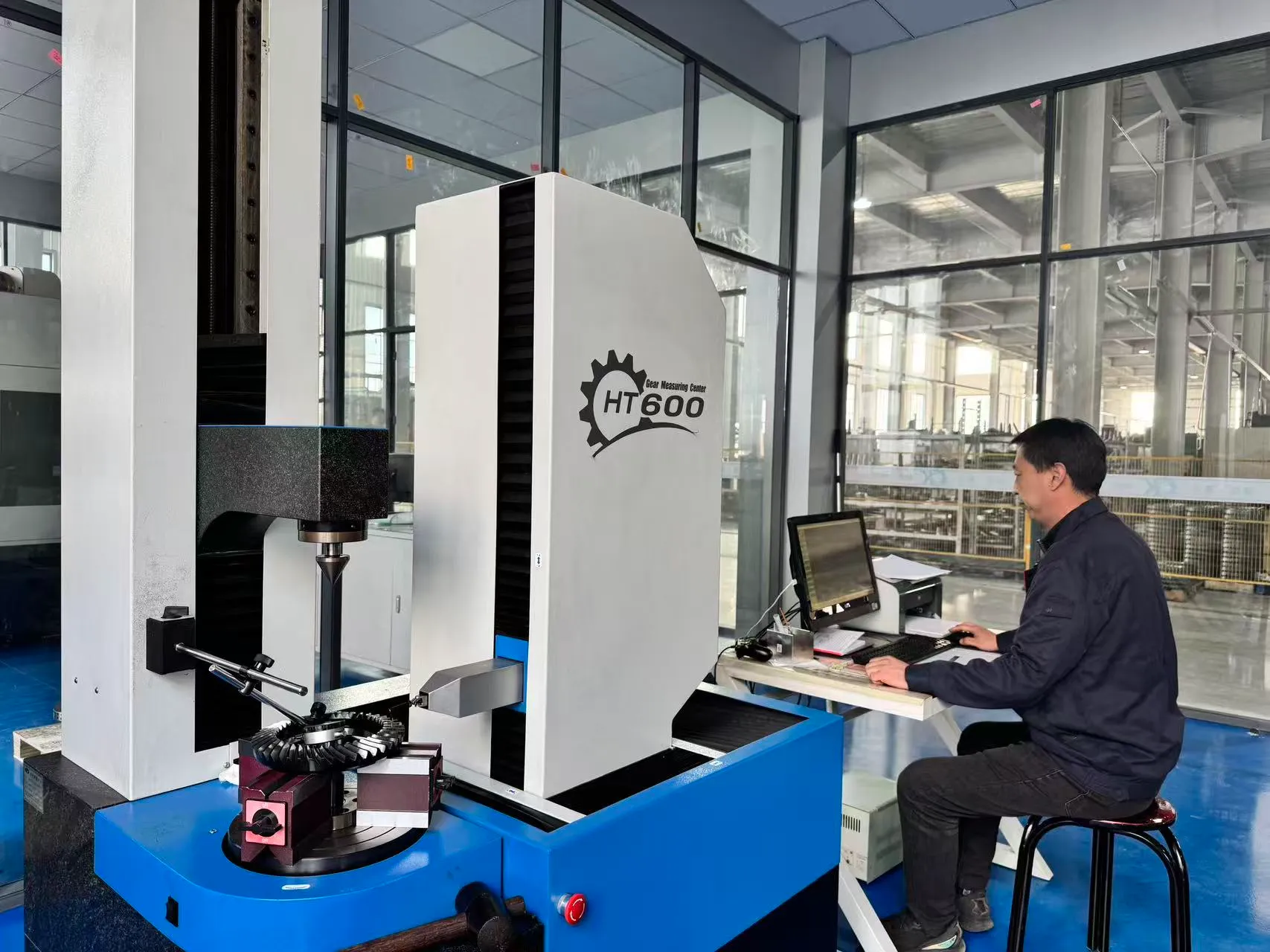
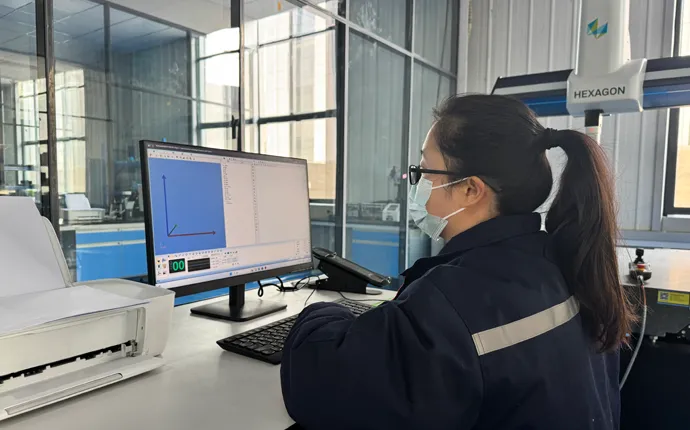
We utilize a high-precision CMM (Coordinate Measuring Machine) to inspect our internal components. Think of this as a “digital DNA test.” A ruby-tipped probe scans the tooth profile, lead, and pitch of the gears with incredible accuracy.
Why this protects your investment:
Heat treatment is a violent process. When we put our 20CrMnTiH alloy steel through deep carburizing, the metal can warp slightly as it hardens. Most low-end factories ignore this. We use the CMM to catch these microscopic warps. If the geometry doesn’t match the original OEM blueprint perfectly, the part is rejected. This ensures that every Differential Assembly you receive has the exact dimensions required for a perfect fit and long-term durability.
2.Tooth Contact Pattern Test: The “Perfect Kiss”
Even if individual gears are perfect, how they “talk” to each other matters most. The Tooth Contact Pattern Test is an essential visual check of the interaction between the ring gear and the pinion.
We apply a specialized marking compound (often called “Engineer’s Blue” or “Yellow Lead”) to the teeth and rotate the assembly under load. What we are looking for is a centered, oval-shaped footprint—the “Perfect Kiss.”
The Risk of a Bad Pattern:
If the contact pattern is too close to the “toe” or “heel” of the gear, the stress is concentrated on the edges. This leads to “chipped teeth” or “pitting.” When a customer buys a Differential Assembly from a factory that skips this step, they are buying a ticking time bomb. Our technicians manually adjust the shims and backlash until that pattern is exactly where it needs to be, ensuring the load is distributed evenly across the metal.
3.Dynamic Noise Testing: Silencing the “Whine”
The most common reason for a Differential Assembly return in the aftermarket is noise. If a driver hears a high-pitched “howl” or “whine” at 80 km/h, they immediately lose trust in the repair. Noise is the sound of vibration, and vibration is the precursor to failure.
We test our units in a dedicated acoustic booth. We don’t just spin the gears; we simulate real-world driving conditions by varying the RPM and applying resistance.
Our “Zero-Noise” Standard:
By using sensitive microphones and frequency analyzers, we can detect sounds that a human ear might miss. If the Differential Assembly produces a harmonic vibration that doesn’t meet our standards, we tear it down and rebuild it. We do the worrying in our factory so that your customers don’t have to hear it on the road.
4.High-Pressure Air Leak Test: The Seal of Quality
An oil leak is a slow death sentence for a drivetrain. If the oil level drops too low, the internal temperature of the Differential Assembly spikes, leading to “blueing” of the metal and eventual seizure.
Instead of just looking for wet spots, we use a High-Pressure Air Leak Test. We seal all the openings and pump the housing full of pressurized air. A digital sensor monitors the internal pressure over a specific timeframe.
Why Air is Better than Oil:
Air molecules are much smaller than oil molecules. If a unit can hold high-pressure air without a single PSI of drop, we know it will never leak oil. This test checks the integrity of the gaskets, the oil seals, and the housing welds. When you receive a Differential Assembly from us, you can be 100% sure it is a “closed system” that will keep its lubricant where it belongs.
5.Final Visual & Torque-to-Spec Inspection
The final stage is the human element. Even with all the machines in the world, an experienced eye is irreplaceable. Our final inspectors perform a “360-degree” check of the entire Differential Assembly.
The Final Checklist:
Torque Verification: Every bolt on the housing and the bearing caps is checked with a calibrated torque wrench. A loose bolt can cause catastrophic internal damage.
Spline Integrity: We inspect the input and output splines to ensure they are clean and free of burrs for a smooth driveshaft connection.
Corrosion Protection: We apply a professional-grade anti-rust coating to ensure the unit stays in pristine condition during long sea voyages and warehouse storage.
Investing in Reliability
In the B2B marketplace, your reputation is built on the reliability of the parts you provide. Every time you sell or install a Differential Assembly, you are putting your name on that product.
By choosing a partner like CK Gears, you aren’t just buying a component; you are buying the results of these five critical inspections. We have invested in the technology and the technicians required to ensure that the words “High Quality” are not just a marketing slogan, but a mechanical reality.
From the micron-level accuracy of our CMM to the silent operation of our dynamic noise tests, we ensure that every Differential Assembly is a “Driven System Solution” you can depend on.