
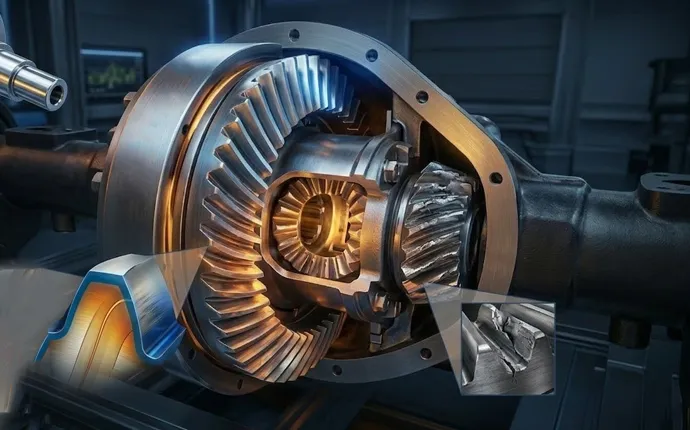
In the demanding vertical of commercial transportation, the differential is more than just a gearbox—it is the final arbiter of power. However, the relentless stress of long-haul routes and heavy payloads often leads to catastrophic failure if the gears are not engineered to perfection. At CK Gears, we recognize that preventing downtime begins with understanding why gears fail and how precision manufacturing intervenes.
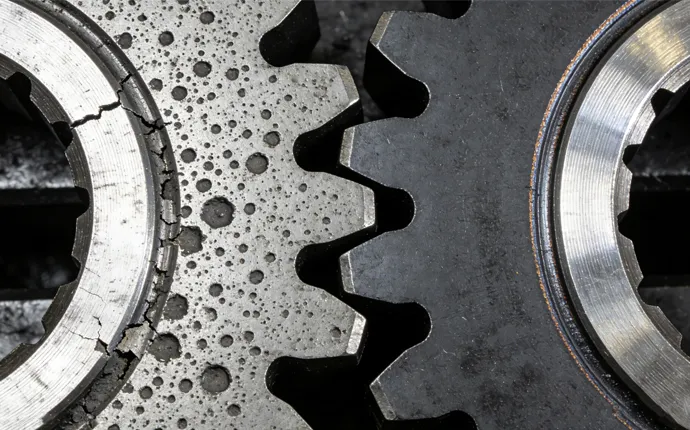
Surface Pitting: The Silent Eraser
The Cause: Pitting occurs when repeated cyclic stress exceeds the surface endurance limit of the gear material. Over time, microscopic cracks form on the tooth surface, leading to small “pits” that disrupt the gear’s smooth engagement.
The Prevention: To combat pitting, we ensure a case hardness of HRC 58-62 through advanced carburizing. This ultra-hard “shield” provides the exceptional wear resistance needed to withstand thousands of hours of sliding friction without surface degradation.
Broken Teeth: The Result of Shock Loads
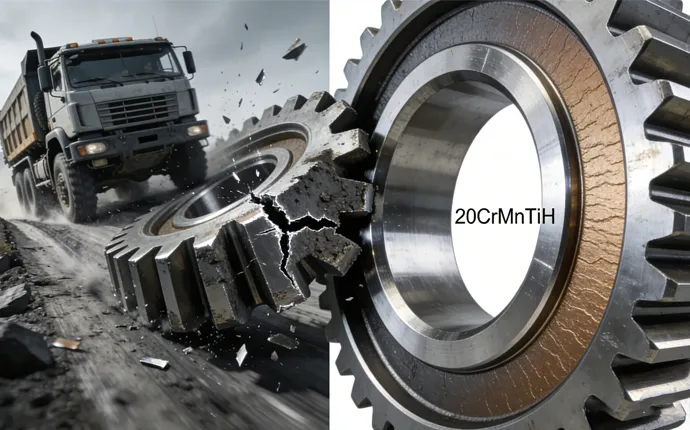
The Cause: Catastrophic tooth breakage usually results from a sudden “shock” torque—such as a heavily loaded truck starting on a steep incline. If a gear is too brittle throughout, the tooth will snap at the root.
The Prevention: We utilize 20CrMnTiH steel to create a specific Hardness Gradient. While the surface is hard, the Core (HRC 30-45) remains tough and ductile. This allows the gear to “flex” slightly under extreme loads, absorbing energy rather than shattering.
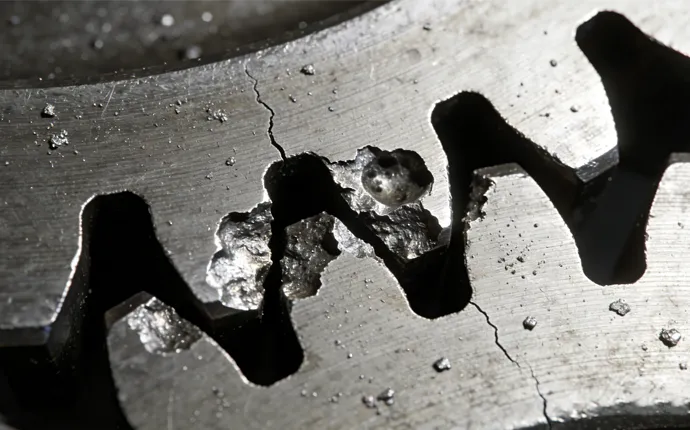
Spalling: Subsurface Fatigue Failure
The Cause: Spalling is a more severe form of surface failure where large flakes of metal break away from the gear tooth. This is often caused by subsurface inclusions or improper grain structures that fail under heavy pressure.
The Prevention: Our use of Titanium-refined grains ensures a fine-grained microstructure that is far more resistant to fatigue. By refining the internal structure of the steel, we prevent the deep-seated cracks that lead to spalling.

Excessive Noise and Vibration (NVH Failure)
The Cause: While not always a physical breakage, high NVH levels indicate poor gear geometry or warping caused during the heat treatment process. This leads to uneven load distribution and accelerated wear.
The Prevention: This is where Hexagon CMM validation becomes critical. We inspect every batch to ensure that the tooth topography matches the theoretical design within microns. Combined with Gleason grinding, we restore perfect geometry post-heat treatment to ensure silent, smooth operation.
Spalling: Subsurface Fatigue Failure
The Cause: Spalling is a more severe form of surface failure where large flakes of metal break away from the gear tooth. This is often caused by subsurface inclusions or improper grain structures that fail under heavy pressure.
The Prevention: Our use of Titanium-refined grains ensures a fine-grained microstructure that is far more resistant to fatigue. By refining the internal structure of the steel, we prevent the deep-seated cracks that lead to spalling.
